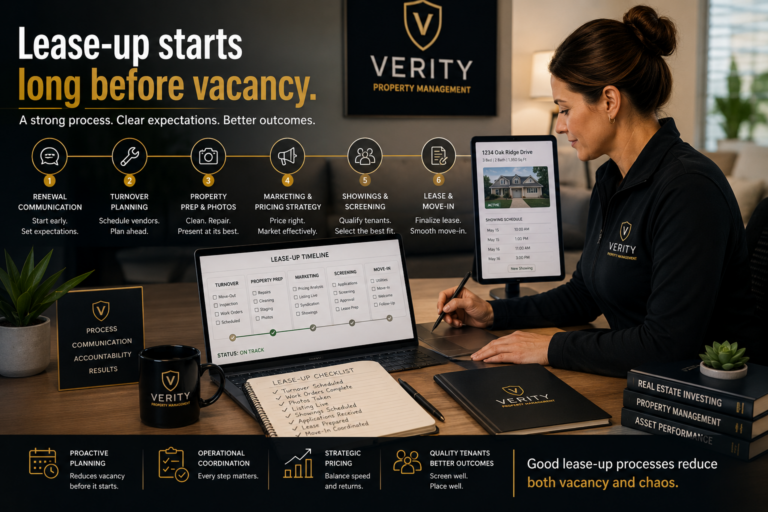
One of the biggest misconceptions in property management is that leasing a property simply means:
“Post photos online and wait for a tenant.”
In reality, a successful lease-up process involves dozens of coordinated operational steps.
And timing matters.
At Verity, lease-up is treated as a structured process designed to:
- reduce vacancy
- improve tenant quality
- protect property condition
- create smoother turnovers
- set expectations clearly from the beginning
The lease-up process starts before vacancy
One of the biggest mistakes property managers make is waiting until the property is vacant before beginning the process.
Strong lease-up planning often begins:
- during renewal discussions
- during notice periods
- during turnover planning
- before maintenance work is completed
This creates:
- better scheduling
- faster marketing
- reduced downtime
- fewer last-minute surprises
Lease-up requires operational coordination
A successful lease-up often includes:
- renewal communication
- move-out coordination
- inspections
- maintenance planning
- cleaning
- photography
- pricing analysis
- marketing syndication
- showing coordination
- application screening
- lease preparation
- move-in coordination
Without systems and accountability, delays compound quickly.
Pricing strategy matters
Pricing a property too aggressively can increase vacancy.
Pricing too low can reduce long-term returns.
Strong lease-up strategy balances:
- market conditions
- current inventory
- seasonality
- property condition
- showing activity
- application volume
Lease-up is not just marketing.
It is operational strategy.
Communication matters throughout the process
Owners should understand:
- where the property sits in the timeline
- what steps are complete
- what is delaying progress
- expected next actions
- current leasing activity
Clear communication reduces uncertainty and helps owners make informed decisions.
The goal is not speed alone
Filling a property quickly is important.
But placing the wrong tenant quickly can become extremely expensive.
Strong lease-up processes balance:
- speed
- quality
- communication
- screening
- property readiness
The goal is operational consistency
At Verity, lease-up is approached as a repeatable operational process—not an improvisational one.
Because reducing vacancy is not just about moving faster.
It is about coordinating the entire process effectively.
Related Content from Verity Property Management:
How We Reduce Vacancy (And Protect Your Rental Income)
Lease Renewal Strategy: Retain or Replace with Confidence
Average Rent Trends in North Texas: What Property Owners Should Know
Property Turnovers Are Not a Maintenance Process. They Are a Trust Process.
Let’s build a better system for your property.