One of the most common frustrations property owners experience is maintenance cost.
A repair that initially sounds simple can quickly become more expensive than expected.
And when owners only see the invoice, it can sometimes feel like:
“Why did this cost so much?”
But the actual cost of maintenance is often far more complex than the repair itself.
Maintenance costs are not just labor and materials
Every maintenance issue typically includes:
- diagnosis
- scheduling
- vendor coordination
- parts sourcing
- communication
- quality control
- follow-up
- operational oversight
In many cases, the most valuable part of property management is not simply dispatching a vendor.
It is making the correct operational decision.
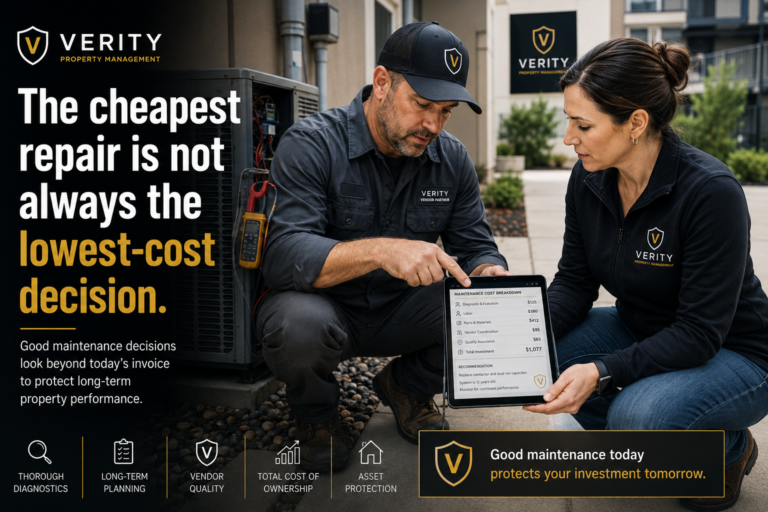
The cheapest repair is not always the lowest-cost solution
Sometimes replacing only the failed component makes sense.
Sometimes it does not.
For example:
- replacing a failing timer may be cheaper today
- but if the main system is near end-of-life, that decision may create duplicate labor and replacement costs a few months later
Good property management looks beyond the immediate invoice and considers:
- remaining equipment life
- efficiency improvements
- reliability
- future labor duplication
- long-term ownership cost
Preventative maintenance matters
Deferred maintenance often becomes significantly more expensive over time.
Small issues:
- leaks
- drainage problems
- HVAC inefficiency
- worn components
rarely stay small forever.
Strong maintenance strategy focuses on:
- identifying problems early
- planning proactively
- reducing emergency repairs
- protecting long-term asset condition
Vendor quality matters too
Not all repairs are equal.
Lower-cost vendors sometimes create:
- incomplete work
- repeat repairs
- poor communication
- lower-quality materials
- inconsistent workmanship
The cheapest invoice is not always the best outcome.
Transparency matters
At Verity, we believe owners should understand:
- what failed
- why the recommendation is being made
- alternative options when appropriate
- long-term considerations
- expected outcomes
Good maintenance communication creates confidence and trust.
The goal is long-term property performance
The purpose of maintenance management is not simply reducing today’s invoice.
It is protecting:
- the property
- the resident experience
- long-term asset value
- future operating costs
Because the real cost of maintenance is often determined over years—not days.
Related Articles
- How Much Does Property Management Cost?
- Pricing Structure Explained: What Property Owners Are Actually Paying For
- Why the Cheapest Property Management Option Often Costs More
- Maintenance Isn’t About Fixing Problems—It’s About Making the Right Decision
- 7 Common Maintenance Issues in North Texas Rental Properties
Let’s build a better system for your property.