Owning a rental property is a little different from owning the home you live in.
When you live in a house, you notice things.
You hear the sprinkler head that suddenly sounds different. You realize the upstairs bedroom isn’t cooling as well as it used to. You see the leaves accumulating around a drain or notice that a faucet outside didn’t survive the last freeze.
Rental property owners don’t have that same daily visibility.
That’s one reason seasonal maintenance matters.
A good seasonal maintenance program creates deliberate opportunities to look at a property before the next season tests it.
And in North Texas, every season seems to have a test.
Maintenance Should Follow the Calendar
Many maintenance problems aren’t particularly surprising.
Air conditioners tend to struggle when temperatures climb.
Irrigation systems reveal problems when lawns need more water.
Gutters and drainage become important during heavy spring storms.
Exterior plumbing becomes vulnerable when temperatures fall below freezing.
Trees that seemed harmless in July can become a problem during a winter storm.
None of these events can be completely prevented. But many of the problems associated with them can be identified before they become emergencies.
That’s the purpose of seasonal maintenance.
It shifts property maintenance from:
Something broke. What do we do?
to:
What is this property likely to face next, and is it ready?
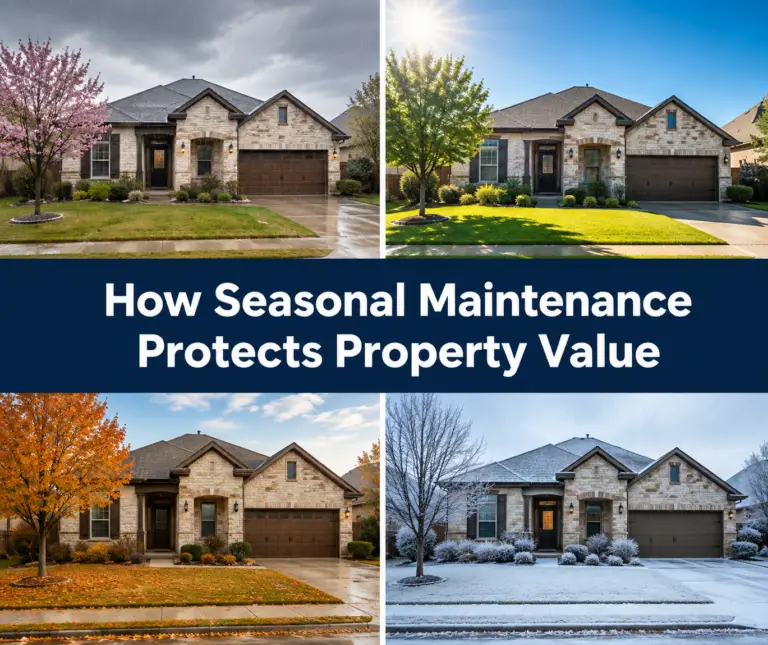
Spring: Look for What Winter Left Behind
Spring is a good time to assess what happened during the colder months and prepare the property for summer.
That might include checking exterior plumbing, irrigation systems, drainage, gutters, fencing, landscaping and other exterior components.
It is also an important time to think about HVAC.
An air-conditioning system that is barely keeping up in April may become an emergency repair when North Texas temperatures reach triple digits.
Finding that problem early gives an owner something extremely valuable: options.
There is time to evaluate the issue, obtain estimates if necessary and make a thoughtful decision rather than reacting to an emergency.
Summer: Watch the Systems Working the Hardest
North Texas summers put enormous stress on homes.
HVAC systems run for long periods. Irrigation systems operate more frequently. Soil dries and moves. Landscaping requires more water.
This is when seemingly minor issues can become expensive.
A small irrigation leak can produce a surprisingly large water bill.
Poor drainage can affect foundations and landscaping.
An HVAC system operating inefficiently may increase utility costs while still failing to keep residents comfortable.
Seasonal oversight helps identify these problems while they are still manageable.
Fall: Prepare Before the First Freeze
Fall maintenance is largely about preparation.
Exterior faucets and plumbing should be considered before freezing weather arrives. Irrigation systems may need seasonal adjustments. Gutters and drainage areas should be clear before winter precipitation. Trees and landscaping may need attention.
The important phrase is before freezing weather arrives.
The worst time to discover a vulnerable exterior pipe is during a hard freeze when plumbers across the region are already overwhelmed with emergency calls.
Preparation doesn’t eliminate every risk.
It reduces unnecessary ones.
Winter: Protect the Property During Extreme Weather
North Texas winters are generally mild—until they aren’t.
A severe freeze can quickly expose plumbing vulnerabilities, poorly insulated areas, damaged exterior fixtures and other problems that may have gone unnoticed throughout the year.
Good property management also requires communication.
Residents may need reminders about protecting exterior faucets, maintaining appropriate interior temperatures, reporting leaks immediately or taking other precautions during severe weather.
Protecting a property isn’t solely about sending a vendor.
Sometimes it is about getting the right information to the right person before something happens.
The Bigger Benefit Is Visibility
The individual maintenance tasks are important, but seasonal maintenance provides another benefit that is easy to overlook:
Someone is regularly paying attention to the property.
Rental homes can go months—or even years—without the owner physically seeing them.
During that time, small changes accumulate.
Caulk deteriorates. Fences loosen. Trees grow. Drainage patterns change. HVAC equipment ages. Minor leaks appear. Residents adapt to small problems instead of reporting them.
None may warrant an emergency maintenance request.
Together, however, they affect the long-term condition of the property.
Regular seasonal attention helps prevent a rental home from slowly deteriorating unnoticed.
Good Maintenance Isn’t About Doing More Maintenance
There is also a danger in turning seasonal maintenance into an expensive checklist of unnecessary services.
Every property is different.
A newer home may require relatively little attention. An older home with mature trees, aging mechanical systems and extensive landscaping may require considerably more.
The objective shouldn’t be to perform maintenance simply because the calendar says so.
It should be to ask:
What risks does this particular property face during the coming season, and what should we address now?
That is a much more useful approach.
Protecting the Asset Over Time
Rental property performance is often measured through rent, vacancy and expenses.
Property condition belongs in that equation too.
A well-maintained home is generally easier to lease, more attractive to good residents and less susceptible to costly surprises. More importantly, maintaining the property protects the underlying asset that the owner ultimately hopes will retain or increase its value over time.
At Verity Property Management, our approach to maintenance is built around that idea.
We don’t want the calendar to tell us something went wrong.
We want it to remind us to look before it does.
Related Articles
- How Clear Expectations Prevent Lease Violations
- How We Prepare a Property for Market
- 7 Common Maintenance Issues in North Texas Rental Properties
- Understanding Maintenance Costs: What Property Owners Are Actually Paying For
- Property Turnovers Are Not a Maintenance Process. They Are a Trust Process.
Let’s build a better system for your property.