Most property maintenance happens one problem at a time.
An air conditioner stops cooling. A water heater leaks. A tenant reports a plumbing problem. A fence needs repair.
For a property manager, these events may be inconvenient, but they are generally manageable because they occur independently.
A major storm is different.
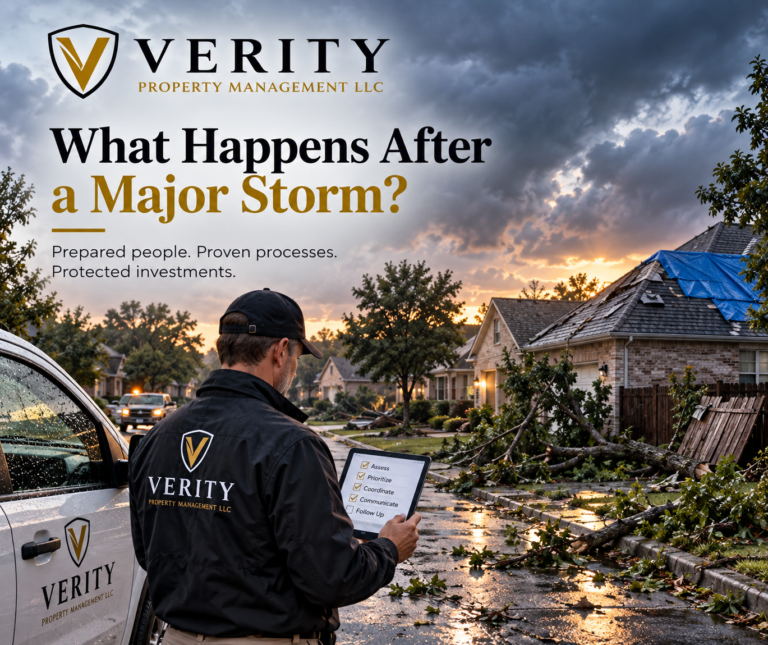
A hailstorm, tornado, severe thunderstorm or winter storm doesn’t know which properties belong to which owner. It can move through an entire neighborhood—or across several communities—in minutes.
Suddenly, a property manager who normally handles one emergency at a time may have five, ten or more properties affected simultaneously.
That changes everything.
One Storm Can Create Many Emergencies
This is one of the less obvious risks of managing a portfolio of rental homes.
Maintenance events aren’t always statistically independent.
If we manage 50 homes across North Texas, we shouldn’t necessarily expect emergencies to arrive neatly spaced throughout the year.
A severe hailstorm could damage roofs at several properties on the same night.
High winds could take down fences and trees across an entire neighborhood.
A tornado could damage multiple homes within minutes.
A prolonged freeze could create plumbing problems throughout the portfolio.
And a widespread power outage could generate calls from residents across an entire community.
The challenge isn’t simply responding to each individual problem.
It’s responding to all of them at once.
2:00 A.M. Is a Bad Time to Invent a Process
Imagine a severe storm moves through the area overnight.
At 2:00 a.m., the first resident reports water coming through the ceiling.
Then another reports a tree against the house.
Another says part of the fence has collapsed.
Then another reports roof damage.
What happens next?
If the property manager has to decide from scratch who should be called, what qualifies as an emergency, which vendors handle which problems, what information needs to be collected, when owners should be notified and how each incident should be documented, valuable time is being spent designing a process during the emergency.
That’s exactly when you don’t want to be designing one.
The objective of an emergency process isn’t to predict every possible situation.
It’s to establish a framework for making good decisions quickly when the unexpected happens.
The First Priority Is People
Property comes second.
If there is an immediate threat to life or safety, residents should contact emergency services.
Once immediate safety concerns have been addressed, the property manager can begin assessing the property itself.
Is the home habitable?
Is water actively entering the property?
Is there an electrical hazard?
Has the structure been compromised?
Does something need to be stabilized immediately to prevent additional damage?
Those questions help establish priorities.
Because after a widespread storm, not every maintenance request can be handled first.
Triage Becomes Essential
When several properties are affected simultaneously, property management starts looking a little like emergency-room triage.
A fallen tree that has damaged a roof and allowed water into the home probably takes priority over a section of fence that has fallen into a backyard.
Both need attention.
They don’t necessarily need attention at the same time.
A good emergency process helps categorize incidents based on factors such as resident safety, habitability, active property damage and the likelihood that delaying action will make the problem substantially worse.
That allows limited resources to be directed toward the most urgent problems first.
Vendors Become a Critical Resource
A storm that damages several rental properties also damages thousands of other homes.
That means the property manager isn’t the only person calling roofers, plumbers, electricians, tree services and restoration companies.
Everyone is.
Vendor relationships that seem routine during normal operations can become extremely important after a major weather event.
Having established vendors, current contact information and clear procedures for emergency dispatch can save valuable time.
It can also reduce the temptation to hire the first unfamiliar contractor who happens to answer the phone during a period when reputable vendors are overwhelmed.
Good vendor management isn’t just about getting competitive pricing during normal operations.
It’s also about having dependable resources when demand suddenly exceeds supply.
Documentation Starts Immediately
Storm response isn’t finished when the immediate emergency has been stabilized.
There may eventually be insurance claims, owner decisions, vendor invoices and questions about exactly what happened.
That makes documentation important from the beginning.
Photos and videos can help establish the condition of the property after the event. Resident reports should be recorded. Vendor observations and invoices should be retained. Owner communications and approvals should be documented.
The objective isn’t paperwork for the sake of paperwork.
It’s creating a clear record while information is still available and memories are fresh.
Owners Need Communication Too
A major storm creates uncertainty for owners—especially owners who don’t live nearby.
They may be watching television coverage of severe weather hundreds or thousands of miles away and wondering whether their rental property was affected.
Good communication doesn’t necessarily mean having an immediate answer.
Sometimes the appropriate update is:
We know the storm affected the area. We are working through the properties based on urgency and will update you when we have confirmed information about your home.
That is far better than silence.
During a widespread event, owners need to know there is a process underway even when the full extent of the damage isn’t yet known.
Systems Create Capacity
This may be the most important lesson.
A property management company cannot keep unlimited employees and vendors standing by in case a major storm arrives.
But it can build systems that allow the people it does have to handle substantially more work when necessary.
Emergency procedures.
Vendor lists.
Resident communication templates.
Owner notification processes.
Maintenance documentation standards.
Triage criteria.
Escalation procedures.
None of these are particularly exciting when the weather is beautiful.
At 2:00 a.m. after a major storm, they can be invaluable.
Systems create capacity because people aren’t wasting scarce time deciding how routine decisions should be made.
They can concentrate on the unusual decisions that actually require judgment.
The Best Emergency Plan Is Built Before the Emergency
No property manager can control the weather.
And no emergency procedure can anticipate everything that might happen.
The objective isn’t to eliminate uncertainty.
It’s to eliminate as many unnecessary decisions as possible before the crisis begins.
At Verity Property Management, we believe good property management isn’t simply about responding when something goes wrong.
It’s about building the processes, relationships and systems that help us respond effectively when several things go wrong at once.
Because the middle of a major storm is a terrible time to start figuring out what happens next.
Related Articles
- Water Damage Scenario: Why Response Matters More Than the Leak
- Why Property Inspections Matter More Than Most Owners Realize
- Preventative Maintenance: The Easiest Way to Protect Your Investment
- What “Good” Property Management Actually Looks Like
Let’s build a better system for your property.