The Call Every Property Manager Eventually Receives
It’s 8:30 PM.
A resident calls and says: “There’s water all over the garage floor.”
Maybe it’s:
- a failed water heater
- a burst pipe
- a washing machine hose
- a refrigerator line
- a plumbing leak
At that moment, nobody knows exactly how extensive the damage is.
What we do know is: Every minute matters.
Unlike many maintenance issues, water damage compounds immediately.
The longer water remains uncontrolled, the larger and more expensive the problem becomes.
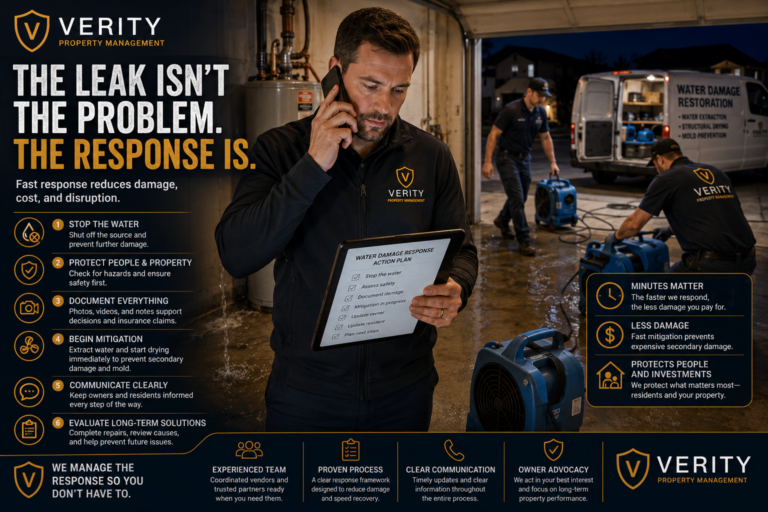
Step 1: Stop the Damage
The first objective is not repairing the leak.
The first objective is stopping additional damage.
Questions include:
- Is water still actively flowing?
- Has the water supply been shut off?
- Is the leak isolated?
- Are there additional areas being affected?
Nothing else matters until the damage stops expanding.
Step 2: Protect People and Property
Before focusing on repairs, safety must be evaluated.
Potential concerns include:
- electrical hazards
- slip hazards
- ceiling collapse risks
- mold exposure
- habitability concerns
A good emergency response protects both the property and the people living in it.
Step 3: Document Everything
Water damage creates a chain of decisions.
Good documentation supports:
- insurance claims
- owner communication
- contractor coordination
- future accountability
Photos and videos taken early often become critical later.
The goal is creating clarity while events are still unfolding.
Step 4: Begin Mitigation Immediately
Many owners assume the repair contractor should be called first.
Often, that’s not the most urgent need.
The highest priority is frequently:
- water extraction
- drying equipment
- dehumidification
- moisture monitoring
The goal is preventing secondary damage.
Because replacing drywall is expensive.
Replacing drywall, flooring, cabinets, and dealing with mold remediation is far more expensive.
Step 5: Communicate Clearly
Emergencies create stress.
Strong communication reduces uncertainty.
Owners should know:
- what happened
- what actions have been taken
- estimated costs
- expected next steps
Residents should know:
- what to expect
- who is coming
- anticipated timelines
- any temporary accommodations required
Communication does not eliminate the problem.
It helps people navigate the problem.
Step 6: Evaluate Long-Term Solutions
Once the situation is stabilized, the focus shifts toward:
- repairs
- replacements
- insurance coordination
- preventative improvements
This is where operational judgment becomes valuable.
The goal is not simply restoring the property.
The goal is reducing the likelihood of the same problem happening again.
The Bottom Line
Most water damage isn’t caused by the leak.
It’s caused by delayed response.
Fast action:
- reduces damage
- lowers costs
- protects residents
- improves recovery time
At Verity, emergency response is built around one objective:
Protect the property while protecting the people who live there.
Related Articles
- What Happens During an Emergency (And How We Decide What to Do)
- The HVAC Failure Scenario: How Good Property Managers Make Decisions
- 7 Common Maintenance Issues in North Texas Rental Properties
- Why Property Inspections Matter More Than Most Owners Realize
- What Counts as Emergency Maintenance?
Let’s build a better system for your property.