Hiring a property management company is often driven by a desire to simplify rental ownership, reduce stress, and improve results. However, many owners are unsure what actually happens after they sign a management agreement.
The first 30 days are typically some of the busiest and most important days in the management relationship. During this period, your property manager is gathering information, evaluating the property, establishing systems, and preparing for long-term success.
Understanding what to expect can help owners feel more confident during the transition process.
Day 1: Information Transfer
The process typically begins with gathering information about the property.
This may include:
- Existing lease documents
- Tenant information
- Maintenance history
- Warranty information
- Utility details
- HOA information
- Property access instructions
- Insurance documentation
The more complete the information transfer, the smoother the transition tends to be.
For vacant properties, the focus often shifts toward property condition, leasing preparation, and marketing readiness.
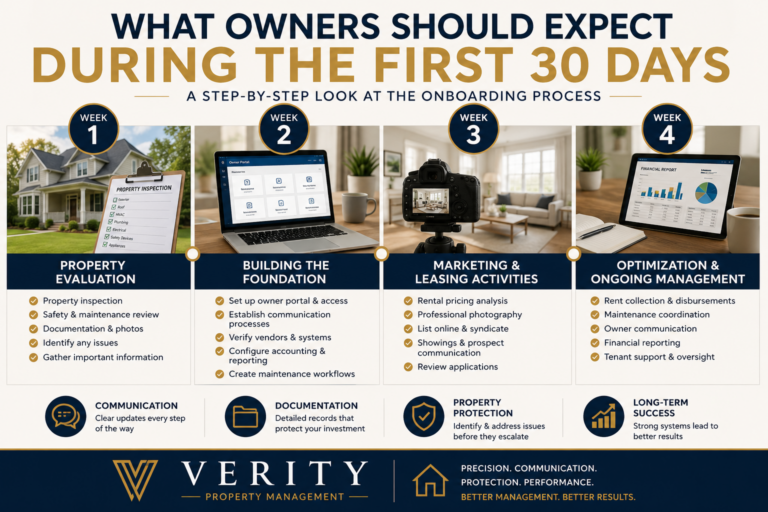
Week 1: Property Evaluation
One of the first priorities is understanding the property’s current condition. Property evaluations often uncover issues that owners may not have realized existed. Read More: We Just Took Over This Property: Here’s What We Found
This often includes:
- Property inspections
- Safety reviews
- Maintenance assessments
- Documentation and photographs
- Identification of deferred maintenance
- Verification of smoke detectors and safety devices
The goal is not to create work unnecessarily. The goal is to identify issues before they become larger and more expensive problems.
Many owners are surprised by how much can be learned during a thorough property evaluation.
Week 2: Building the Foundation
Property management is largely about systems and processes.
During the second week, management systems are typically established and verified, including:
- Owner portal setup
- Tenant communication procedures
- Vendor relationships
- Maintenance workflows
- Emergency response procedures
- Accounting processes
While much of this activity happens behind the scenes, it creates the foundation for consistent service moving forward.
Week 3: Leasing and Marketing Activities
If the property is vacant, leasing activities generally begin in earnest. Establishing competitive rental pricing is one of the most important steps in reducing vacancy and attracting qualified tenants. Read More: How We Evaluate Rental Pricing
This may include:
- Rental pricing analysis
- Professional photography
- Listing preparation
- Advertising and syndication
- Showing coordination
- Prospect communication
The objective is to present the property professionally and attract qualified applicants as quickly as possible. Professional presentation plays an important role in generating interest and increasing showing activity. Read More: Why Great Photos Lease Properties Faster
For occupied properties, the focus may instead remain on communication, lease administration, maintenance planning, and relationship management.
Week 4: Optimization and Ongoing Management
By the fourth week, most of the initial transition activities have been completed. Effective property management relies on systems, consistency, communication, and accountability. Read more about what you can expect: What “Good” Property Management Actually Looks Like
Attention begins shifting toward ongoing management responsibilities such as:
- Rent collection
- Maintenance coordination
- Owner communication
- Financial reporting
- Tenant support
- Property oversight
At this stage, the property should be operating within established systems and procedures designed to create consistency and accountability.
Communication Is Critical
One of the most common concerns owners have during the onboarding process is communication.
Good property management should not leave owners wondering what is happening.
Clear communication regarding inspections, maintenance findings, leasing activity, and property performance helps build trust and keeps owners informed throughout the process.
The first month often establishes expectations that will shape the long-term relationship.
Every Property Is Different
Not every property follows the same path.
A vacant property may require immediate marketing and leasing efforts. Vacant properties often follow a different onboarding process than occupied homes due to turnover and leasing requirements. Read More: What Happens Between Tenants? A Complete Turnover Timeline
A newly acquired property may need maintenance work or improvements.
An occupied property with an existing tenant may require little operational change initially.
The exact activities may vary, but the objective remains the same: protect the property, support the tenant, and create the best possible outcome for the owner.
How Verity Property Management Helps
At Verity Property Management, we view the first 30 days as an opportunity to establish a strong foundation for long-term success.
By understanding the property, implementing consistent systems, and communicating clearly with owners, we help ensure that the transition into professional management is as smooth as possible.
Property management is not simply about collecting rent. It’s about building processes that protect investments and create predictable results over time.
Related Articles
- We Just Took Over This Property: Here’s What We Found
- How We Evaluate Rental Pricing
- Why Great Photos Lease Properties Faster
- What Happens Between Tenants? A Complete Turnover Timeline
- What “Good” Property Management Actually Looks Like
Let’s build a better system for your property.