Lease renewals are one of the most important—and often overlooked—drivers of property performance.
Handled well, they:
- reduce vacancy
- stabilize cash flow
- improve long-term tenant quality
Handled poorly, they create:
- unnecessary turnover
- lost revenue
- inconsistent pricing
Our approach
1. Evaluate before offering renewal
Every tenant is assessed based on:
- payment history
- lease compliance
- property condition
2. Align pricing to the market
Renewal rates are based on current market conditions—not guesswork.
3. Communicate early and clearly
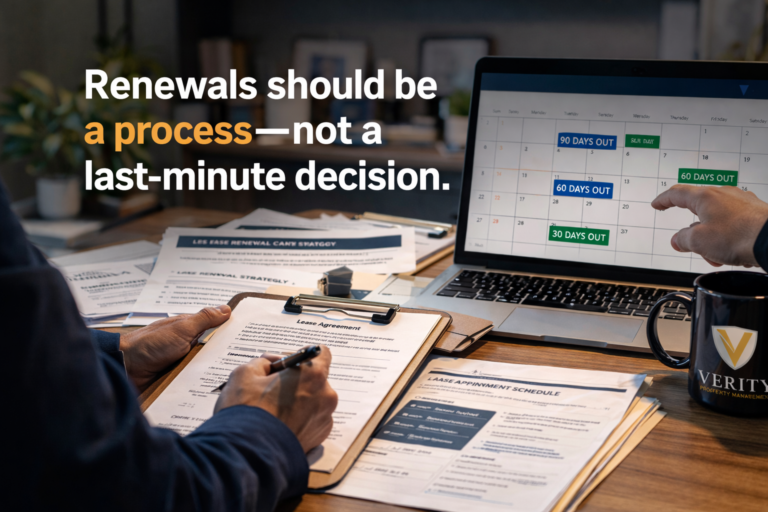
We begin outreach approximately 90 days before lease expiration.
4. Provide structured decision points
Tenants receive clear timelines to renew or prepare to vacate.
5. Plan ahead for transitions
If a tenant does not renew, we begin marketing and preparation early to minimize vacancy.
The bottom line
Renewals shouldn’t be reactive.
They should be strategic.
At Verity, a defined process ensures better retention decisions and stronger financial outcomes.
Related Articles
- How We Reduce Vacancy (And Protect Your Rental Income)
- Understanding the Lease-Up Timeline: What Owners Should Expect
- Tenant Screening: The First and Most Important Decision
- Property Turnovers Are Not a Maintenance Process. They Are a Trust Process.
- Average Rent Trends in North Texas: What Property Owners Should Know
Let’s build a better system for your property.