A rental-property owner receives an estimate for a repair.
The issue is not an emergency. The affected system still works. The tenant can continue living in the home. The owner decides to wait.
For the moment, no money leaves the bank account.
That can feel like a savings.
But the expense has not disappeared. It has been postponed—and the owner has accepted the risk that the problem will grow while they wait.
Some maintenance can be scheduled responsibly for a later date. A cosmetic improvement may wait until turnover. Several nonurgent projects may be combined to reduce vendor costs. An aging system may be monitored while the owner prepares financially for replacement.
Deferred maintenance is different.
It occurs when necessary work is postponed without a defined plan, budget or understanding of the consequences. The visible repair remains undone while less visible costs begin to accumulate.
Those costs may include secondary property damage, emergency labor, shortened equipment life, higher utilities, tenant dissatisfaction, lost rent, insurance complications and reduced property value.
Deferred maintenance rarely eliminates an expense.
It converts a predictable repair into a larger and less controllable problem.
The Cost Owners See—and the Costs They Do Not
The owner sees the immediate estimate:
- Repair the roof flashing
- Replace a deteriorated water heater
- Service the HVAC system
- Correct a drainage problem
- Seal an exterior opening
- Repair a slow plumbing leak
The decision may be framed as a choice between spending the quoted amount now or keeping that money.
But the actual comparison is often between:
- Completing a defined repair under controlled conditions, or
- Accepting an uncertain combination of future repair, damage and disruption costs
The hidden costs of waiting can include:
- Damage to surrounding materials
- Emergency or after-hours service premiums
- More extensive demolition and reconstruction
- Accelerated failure of related components
- Higher water or electricity consumption
- Mold evaluation or remediation
- Pest treatment
- Tenant credits, temporary accommodations or other disruption costs
- Lost rent during an extended turnover
- Reduced renewal probability
- Lower marketability and rent potential
- Repeated diagnostic visits
- Additional management time
- Fewer vendor and replacement choices
The original estimate may ultimately become the smallest part of the expense.
How a Minor Defect Becomes a Major Expense
Deferred maintenance often follows a predictable progression.
1. A small defect appears
A slow leak develops. An HVAC system begins making an unusual sound. Caulking separates around a window. Water collects near the foundation. A section of exterior wood begins to deteriorate.
2. The repair is postponed
The system still functions, so the issue does not feel urgent. The owner hopes it will remain stable or plans to revisit it later.
3. Secondary damage develops
Water reaches drywall, insulation, cabinets or flooring. A stressed component causes additional equipment wear. Moisture attracts pests or creates conditions in which mold can grow.
4. The failure becomes urgent
The owner loses control over timing. The problem must be addressed immediately, possibly at night, during a weekend or in extreme weather.
5. The tenancy is disrupted
The tenant loses air conditioning, hot water, plumbing or use of part of the home. Communication becomes more difficult because the tenant is experiencing the consequence rather than merely reporting an early warning sign.
6. The eventual cost expands
The owner now pays for the original defect, related damage, emergency response and the disruption created by the failure.
Maintenance can often be scheduled. Failure arrives on its own timetable.
A Small Roof Leak Does Not Stay on the Roof
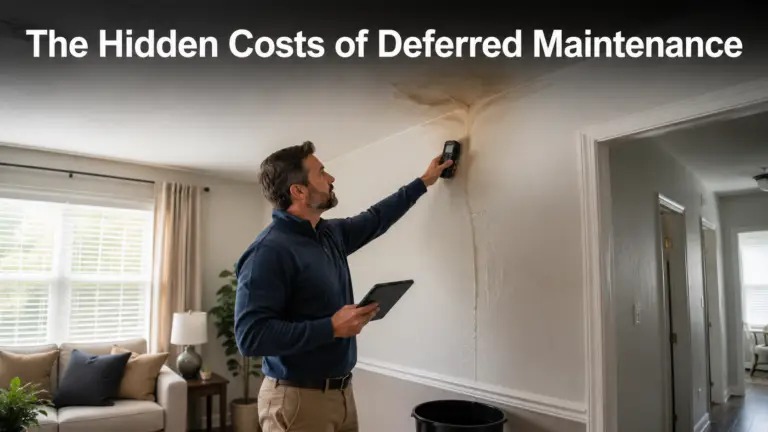
A roof leak may begin with damaged flashing, a failed seal or a localized roofing defect.
If addressed early, the repair may remain limited to the roof.
If water continues entering the structure, the scope can expand to include:
- Wet insulation
- Ceiling and drywall repair
- Interior texture and paint
- Damaged flooring or furnishings
- Electrical evaluation
- Mold investigation or remediation
- Temporary relocation or loss of use
The path of the water may also make the source difficult to identify. The visible ceiling stain can appear far from the actual roof opening, leading to repeated inspections before the correct repair is completed.
Time matters with water. The U.S. Environmental Protection Agency advises acting quickly after indoor leaks or spills and notes that, in many cases, mold will not grow when wet or damp materials are dried within 24 to 48 hours.
The cost of waiting is therefore not measured only in additional days. It may be measured in additional materials that must be removed, dried, treated or replaced.
A Struggling HVAC System Costs Money Before It Fails
An HVAC system does not have to stop running to create an expense.
Poor airflow, dirty filters, blocked drains, low refrigerant, failing capacitors and other conditions can reduce performance while the system continues operating.
The hidden costs may include:
- Higher electricity usage
- Longer run times
- Increased wear on components
- Uneven temperature and reduced comfort
- Water damage from a condensate problem
- Emergency failure during peak summer demand
- Limited access to preferred vendors or replacement equipment
- Tenant frustration and repeated service requests
ENERGY STAR advises that a dirty filter slows airflow, makes the system work harder, wastes energy and can contribute to expensive maintenance or early equipment failure.
In North Texas, timing is especially important. An owner who schedules service during moderate weather generally has more choices than one seeking an immediate replacement during an extended period of extreme heat.
The eventual repair may have been unavoidable. The emergency timing and collateral costs may not have been.
Slow Plumbing Leaks Create Expensive Secondary Damage
A slow leak under a sink, behind a toilet or near an appliance can appear insignificant because the volume of water is small.
But water works continuously.
Over time, it can damage:
- Cabinet bases
- Subflooring
- Baseboards
- Drywall
- Flooring in adjacent areas
- Insulation
- Personal property
A small plumbing repair can become a cabinetry, flooring and water-remediation project.
The source of responsibility can also become more complicated when an issue is not reported promptly. Owners and managers should make maintenance reporting easy, tell tenants which conditions require urgent notice and respond appropriately when a report is received.
The earlier the problem is documented and diagnosed, the more likely the repair will remain limited to its original scope.
Drainage Problems Can Affect More Than the Yard
Standing water, erosion and poor drainage may initially look like landscaping concerns.
They can also contribute to:
- Soil movement
- Water collecting near the foundation
- Moisture intrusion
- Damaged landscaping
- Pest activity
- Deterioration of exterior materials
- Slippery or unusable areas
Drainage problems are particularly easy to postpone because the property may appear normal during dry weather. The owner may see the issue only after a major storm, when vendors are busy and the consequences are most visible.
Photographs during rainfall, tenant observations and periodic exterior inspections can help identify patterns that are not apparent on a sunny inspection day.
Paint, Caulking and Exterior Finishes Are Not Merely Cosmetic
Some property components have both an aesthetic and protective purpose.
Exterior paint helps protect underlying materials. Caulking helps limit water and air intrusion. Grout, seals and flashing help direct moisture away from vulnerable areas.
When these components deteriorate, the property may still look acceptable from a distance. The protective barrier, however, may already be failing.
Postponing resealing or repainting can allow moisture to reach wood, siding, trim, windows and interior finishes. At that point, the project is no longer simply cosmetic.
Replacing damaged material is usually more expensive than maintaining the surface that protected it.
Deferred Maintenance Shortens the Life of Other Components
Property systems operate together.
A neglected component can place additional stress on another:
- A clogged HVAC filter makes the system work harder
- A failed gutter directs water toward fascia, siding or the foundation
- A dripping faucet increases water use and may stain or deteriorate fixtures
- Damaged weatherstripping allows conditioned air to escape
- A loose roof tile or shingle exposes surrounding materials
- A leaking irrigation component damages landscaping and wastes water
- A failing seal permits moisture into cabinets, walls or flooring
This means the cost of deferred maintenance cannot always be assigned to one item. The owner may preserve the apparent life of the maintenance budget by consuming the useful life of the property instead.
Emergency Repairs Cost More Than Planned Repairs
When an owner controls the timing, they can often:
- Request multiple estimates
- Select a preferred vendor
- Schedule work during normal hours
- Order the appropriate equipment or materials
- Coordinate access with the tenant
- Combine related work
- Budget for the expense
- Evaluate repair versus replacement
An emergency removes many of those choices.
The available vendor may charge more. The preferred equipment may not be in stock. Temporary work may be required before permanent work can begin. The tenant’s immediate needs may make price comparison impractical.
The owner is no longer purchasing only a repair.
The owner is purchasing speed, availability and damage control.
Tenant Trust Is a Financial Asset
Maintenance affects more than the building.
Tenants form opinions about whether the owner and property manager care about the condition of the home. Those opinions influence communication, cooperation and renewal decisions.
When tenants repeatedly report problems without seeing meaningful action, they may:
- Stop reporting smaller issues
- Assume maintenance requests will be ignored
- Become less cooperative with scheduling and access
- Take less care of the property themselves
- Resist rent increases
- Decline to renew
- Leave negative reviews
- Treat each new problem as part of a larger pattern of neglect
This creates a dangerous cycle.
The owner receives less information about the property precisely when better information is needed. Small defects remain hidden longer, and the next repair becomes more expensive.
Responsive maintenance does not require approving every tenant request or replacing every imperfect item. It requires acknowledging the report, investigating appropriately, explaining the decision and following through on necessary work.
Deferred Maintenance Can Become a Vacancy Expense
An owner may postpone several repairs because the tenant can continue living with the conditions.
At move-out, all of those items become part of the turnover.
The home may then require:
- Multiple vendor appointments
- Sequential work that cannot occur simultaneously
- Special-order parts or materials
- Drying or remediation
- Additional cleaning after construction
- New photographs after the work is completed
- Delayed marketing and showings
Every additional vacant day has a cost.
An owner who postponed $2,000 of repairs during the tenancy may later pay for the same repairs, additional deterioration and several weeks of lost rent.
The vacancy cost does not appear on the contractor’s invoice, but it belongs in the maintenance calculation.
Deferred Maintenance Can Reduce Rent and Property Value
Renters compare properties.
A home with worn finishes, visible leaks, poor HVAC performance, damaged landscaping or multiple small defects may still lease, but it may require:
- A lower asking rent
- More time on the market
- Greater concessions
- Acceptance of a smaller applicant pool
- Additional negotiation after showings
The same conditions can affect a future sale. Buyers may assume that visible deferred maintenance is evidence of less visible neglect. Inspection findings can produce repair demands, price reductions or failed transactions.
Maintenance therefore protects both current cash flow and the owner’s eventual exit options.
The value of a well-maintained property is not limited to what was repaired. It includes the confidence that the property does not contain a long list of unresolved surprises.
Legal, Insurance and Documentation Risks
Some repairs involve more than owner preference.
Texas law requires landlords, under specified conditions, to make a diligent effort to repair or remedy conditions that materially affect an ordinary tenant’s physical health or safety. Lease terms, local requirements and the facts of the condition may create additional obligations.
Insurance also should not be treated as a maintenance plan. Coverage depends on the policy and cause of loss. A sudden covered event and deterioration resulting from a long-term unresolved condition may be treated differently.
Owners should:
- Respond promptly to health and safety concerns
- Preserve tenant notices and work orders
- Document inspections and vendor findings
- Follow the insurer’s reporting requirements when a possible claim occurs
- Avoid assuming that a future policy payment will cover damage caused by delay
- Seek qualified legal, insurance or technical guidance when the risk is unclear
Documentation helps demonstrate when the problem was reported, what was observed, what action was authorized and whether the condition changed.
Not Every Repair Must Be Completed Immediately
A credible maintenance strategy does not treat every defect as an emergency.
Work can be classified as:
| Classification | Typical response |
|---|---|
| Emergency | Act immediately to protect people and property |
| Urgent | Diagnose and schedule promptly before the condition worsens |
| Necessary but schedulable | Plan the work within a defined timeframe and budget |
| Preventive | Complete before predictable seasonal or equipment risk increases |
| Turnover improvement | Schedule when the property becomes vacant if delay will not cause harm |
| Cosmetic or optional | Evaluate against rent, tenant experience and investment strategy |
The problem is not deciding thoughtfully that a low-risk cosmetic item can wait.
The problem is allowing necessary maintenance to remain indefinitely unresolved because it is not yet an emergency.
Before postponing work, owners should ask:
- Can the condition cause secondary damage?
- Does delay create a health, safety or legal concern?
- Will the system become more expensive to repair after failure?
- Is the problem affecting utilities or another component?
- Could seasonal conditions increase the risk?
- What will the tenant experience while we wait?
- Will the work delay a future turnover or sale?
- Do we have a defined date, budget and trigger for action?
A scheduled repair has a plan. Deferred maintenance has an excuse.
The Importance of a Property Reserve
Maintenance decisions become more emotional when every repair competes with the owner’s personal cash flow.
A property reserve creates room to make decisions based on the needs of the asset rather than the owner’s immediate bank balance.
The reserve should not be viewed as idle money. It provides the ability to:
- Authorize necessary work promptly
- Avoid high-cost emergency financing
- Respond to tenant needs
- Protect surrounding materials and systems
- Select the appropriate repair rather than the cheapest temporary response
- Prepare for aging equipment and predictable capital expenses
A reserve does not eliminate maintenance costs. It prevents ordinary property ownership from becoming a recurring financial emergency.
The Property Manager’s Role
A professional property manager should not approve every vendor recommendation without scrutiny. The manager should help the owner distinguish among immediate risk, necessary scheduled work and optional improvement.
That requires:
- Obtaining reliable information about the condition
- Asking vendors to explain cause, consequence and urgency
- Documenting photographs and findings
- Considering repair versus replacement
- Identifying the cost of continued delay
- Communicating the tenant impact
- Coordinating access and work efficiently
- Following up to confirm completion
- Maintaining records that support future decisions
The manager adds value not only by reducing repair costs, but also by helping the owner avoid false savings.
The cheapest decision today can become the most expensive decision over the life of the property.
Control the Repair Before the Repair Controls You
Rental properties will require maintenance. No management strategy can eliminate that reality.
The owner can either address many problems while they remain limited and predictable or wait until the property chooses the timing and scope.
Deferred maintenance does not remain motionless.
Water continues to travel. Components continue to wear. Wood continues to deteriorate. Tenants continue forming opinions about the home. Vendors and equipment become more difficult to obtain when demand is highest.
The least expensive repair is not always the repair with the lowest initial estimate.
It is often the repair completed while the owner still controls the timing, scope, vendor and effect on the tenancy.
Maintenance works on the owner’s schedule.
Failure works on its own.
Related Articles
- What Makes a Great Rental Property Investment?
- Why Documentation Matters in Property Management
- Security Deposits Explained: What Owners Need to Know
- What We Look For During Move-In Inspections
- The Economics of Resident Retention
Let’s build a better system for your property.