Uncategorized

Uncategorized

Tenant Screening: The First and Most Important Decision

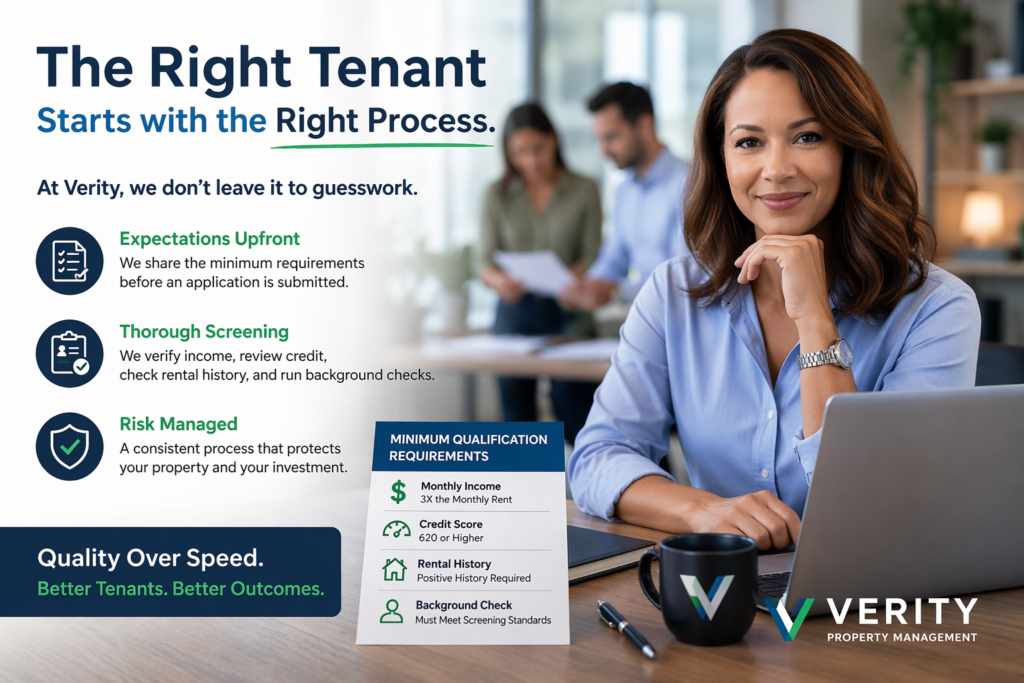
Tenant screening is the most important decision in property management because it directly impacts risk, cash flow, and property condition. At Verity, we use a structured, criteria-driven process—and we make our minimum requirements available upfront—so applicants understand expectations before applying. This ensures fairness, transparency, and more reliable outcomes for owners.

Uncategorized

Why Systems Beat “Good People” in Property Management

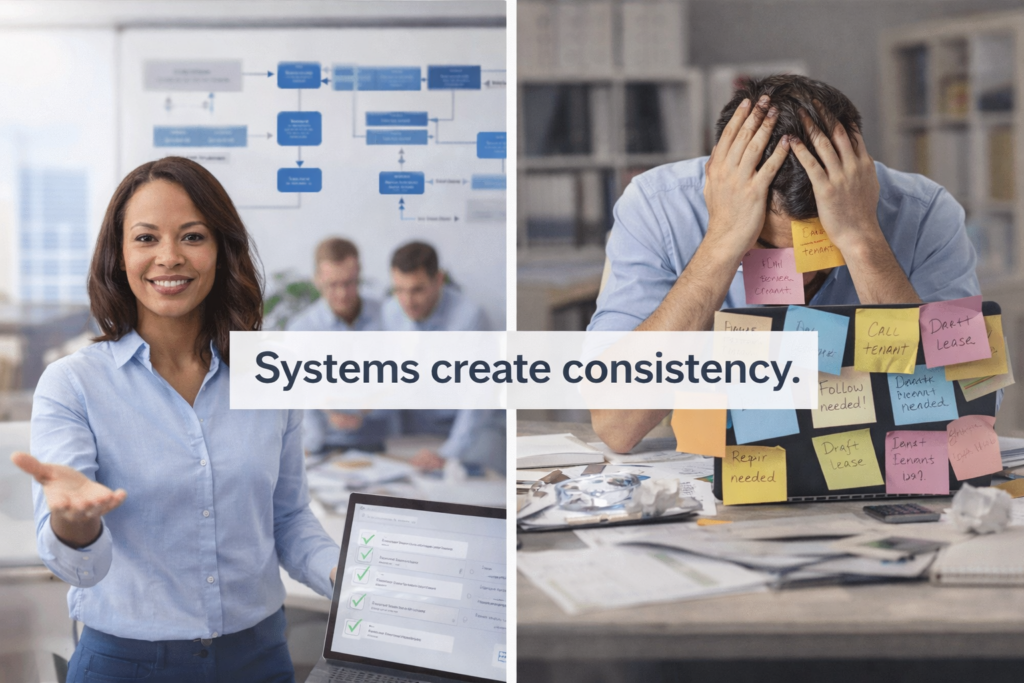
Consistent property management isn’t built on individual performance—it’s built on systems. While great people matter, structured processes ensure reliable service regardless of staffing changes or availability. For owners, that means dependable results and fewer surprises over time.

Uncategorized

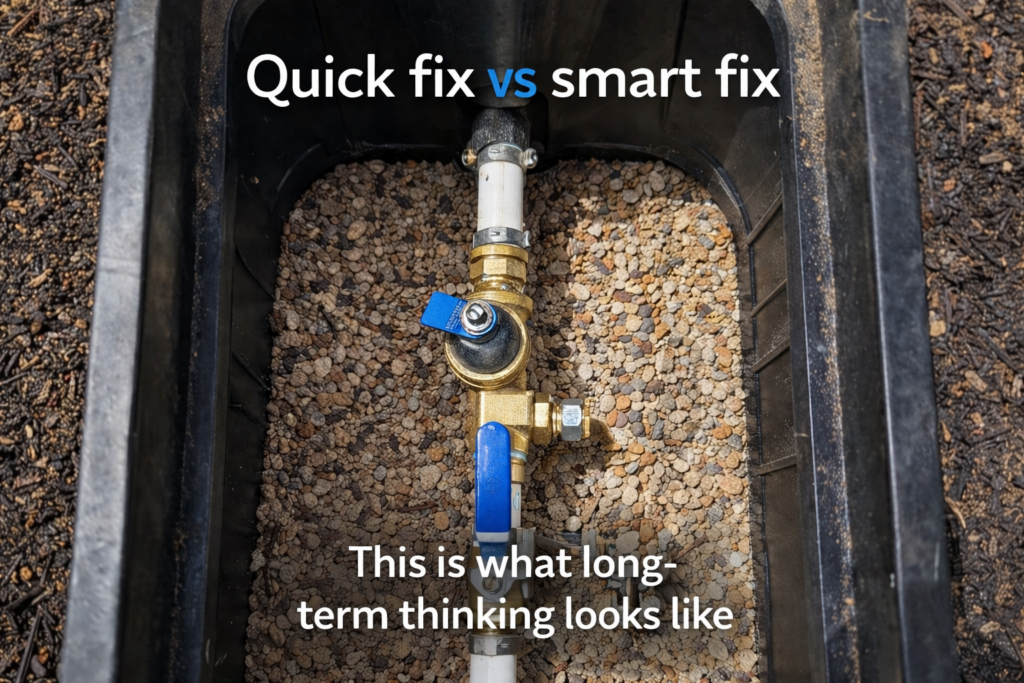
The Cheap Fix Is Usually the Expensive One

Great property management isn’t just about fixing problems—it’s about preventing the next one. In this case, a simple valve replacement became an opportunity to improve access, add protection, and extend the life of the system. Small decisions like this compound into better outcomes for owners over time.

Uncategorized

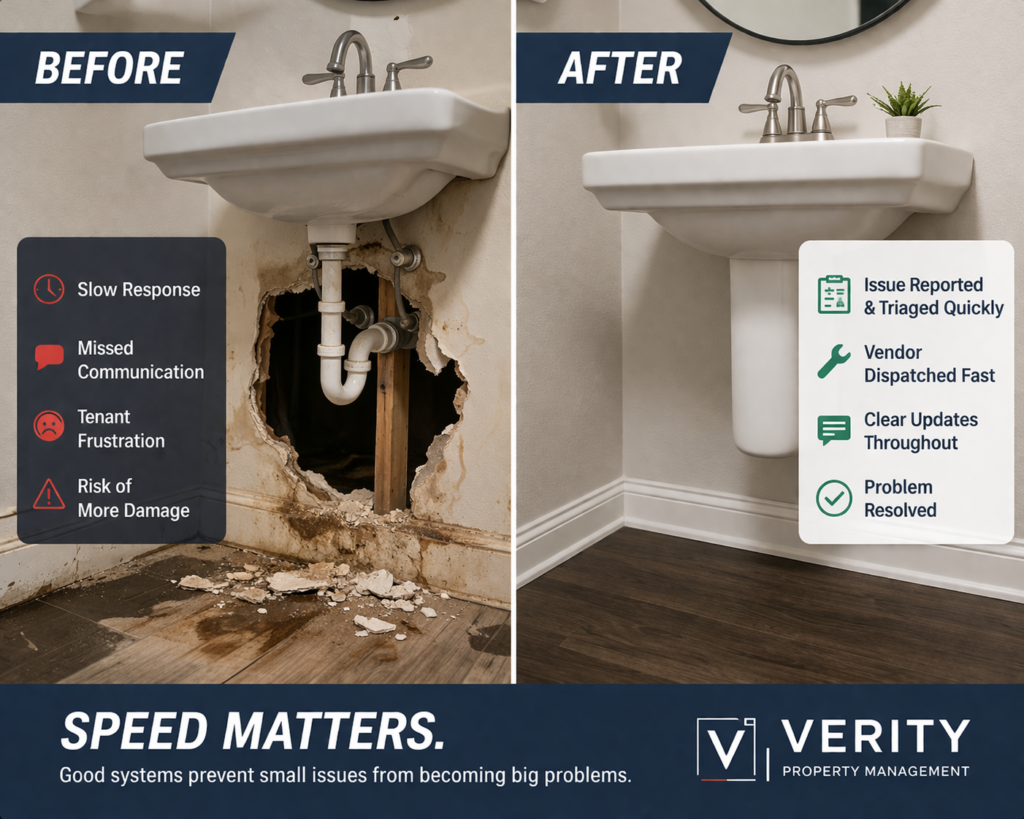
Before & After: Why Maintenance Systems Matter

Small maintenance issues don’t start expensive—they become expensive when they’re handled slowly. The difference between a quick fix and a major repair is having the right systems in place. Strong processes ensure issues are handled early, efficiently, and without unnecessary risk.

Uncategorized

What does a good tenant experience actually look like?

A great tenant experience isn’t about being nice—it’s about having systems that work. Clear communication, fast responses, and simple processes make everything feel smooth and predictable. At Verity Property Management, we focus on building those systems so both tenants and owners benefit.

Uncategorized

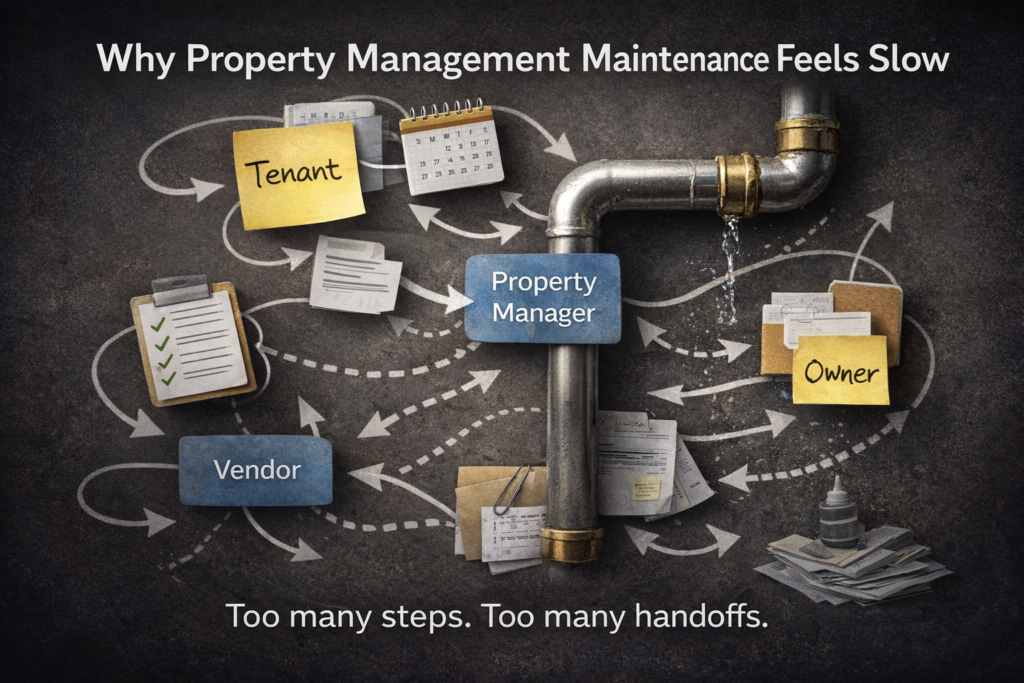
Why does property management maintenance feel so slow?

Maintenance delays are often caused by the process surrounding the repair rather than the repair itself. Every handoff, approval, and scheduling step introduces additional time, turning simple issues into lengthy resolutions. Improving maintenance outcomes often starts with simplifying workflows, reducing friction, and eliminating unnecessary delays.

Scroll to Top