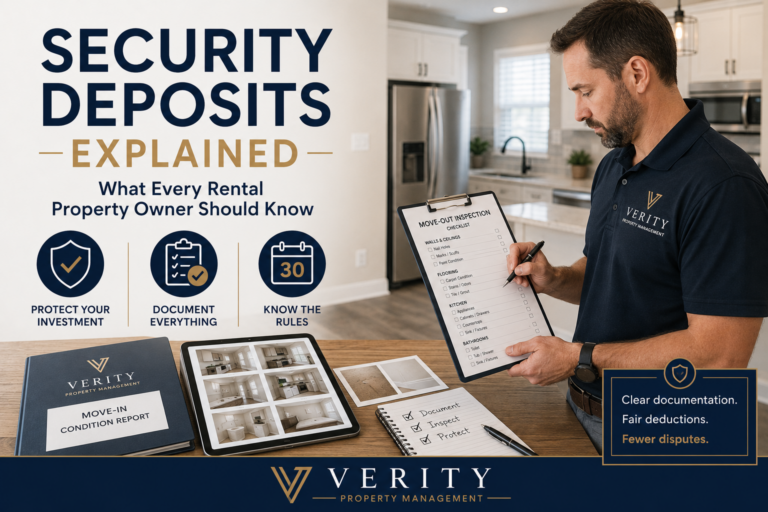
For many rental property owners, the security deposit feels straightforward. Collect the deposit when the tenant moves in, return it when they move out, and keep some or all of it if there is damage. In practice, security deposits are one of the most common sources of disputes between landlords and tenants, and misunderstandings can create legal exposure, negative reviews, and unnecessary conflict.
Understanding how security deposits work—and how they should be managed—can help owners protect their investment while remaining compliant with Texas law.
What Is a Security Deposit?
A security deposit is money collected from a tenant to protect the property owner against financial losses resulting from the tenant’s actions during the lease term. These losses may include unpaid rent, damage beyond normal wear and tear, unpaid utility charges that become the owner’s responsibility, or other lease violations that create a financial obligation.
The deposit is not additional rent, nor is it intended to cover routine maintenance expenses that naturally occur as a property ages.
Normal Wear and Tear vs. Damage
One of the most important distinctions for property owners is the difference between normal wear and tear and tenant-caused damage.
Normal wear and tear occurs through ordinary use of the property. Examples may include minor carpet wear in high-traffic areas, small nail holes from hanging pictures, fading paint, or minor scuff marks on walls.
Damage occurs when the condition of the property deteriorates because of negligence, misuse, accidents, or unauthorized alterations. Examples may include large holes in walls, broken doors, pet damage, stained carpets requiring replacement, missing fixtures, or excessive filth that requires professional remediation.
Many deposit disputes arise because owners attempt to charge tenants for items that fall into the normal wear and tear category. Proper documentation and objective standards help prevent disagreements. For a more detailed breakdown of what is considered wear and tear versus tenant-caused damage, see Understanding Wear and Tear vs Damage.
Documentation Is Your Best Protection
The strongest defense against a security deposit dispute is thorough documentation.
Before a tenant moves in, owners should ensure that detailed photographs and condition reports are completed. Move-in documentation establishes the property’s baseline condition and provides evidence if questions arise at move-out. Our article on What We Look For During Move-In Inspections explains how these inspections establish the property’s baseline condition.
At the end of the lease, a thorough move-out inspection should be conducted using the same standards. Comparing move-in and move-out documentation often makes the difference between a straightforward deposit settlement and a prolonged dispute. Learn more in What We Look For During Move-Out Inspections.
Professional property management companies typically maintain detailed inspection records throughout the tenancy, creating an additional layer of protection for owners.
Texas Security Deposit Requirements
Texas law generally requires landlords to return a tenant’s security deposit or provide an itemized accounting of deductions within 30 days after the tenant surrenders the property and provides a forwarding address.
If deductions are made, owners should provide clear documentation showing the basis for each charge. Invoices, photographs, contractor estimates, and inspection reports can all support the legitimacy of deductions.
Failing to properly account for security deposits can expose landlords to significant penalties and legal challenges.
Because landlord-tenant laws can change and individual situations vary, owners should consult qualified legal counsel regarding specific legal questions.
Common Mistakes Property Owners Make
Many owners unintentionally create problems by making one or more of the following mistakes:
- Failing to document property condition before move-in.
- Using security deposits to fund routine maintenance.
- Charging tenants for normal wear and tear.
- Missing statutory deadlines for returning deposits or providing accounting.
- Making deductions without supporting documentation.
- Attempting to estimate damages without obtaining actual repair costs.
These mistakes often stem from good intentions but can quickly become expensive if challenged. Many of these mistakes can be avoided through consistent recordkeeping and inspection procedures. Why Documentation Matters in Property Management explains how proper documentation protects both owners and tenants.
The Value of Consistent Processes
The most successful rental property owners treat security deposit administration as a process rather than a judgment call.
Standardized inspections, documented procedures, consistent communication, and timely accounting reduce disputes and improve outcomes for both owners and tenants. The goal is not simply to retain as much of the deposit as possible. The goal is to fairly account for legitimate damages while maintaining compliance and professionalism. Consistent procedures do more than reduce disputes. They also help owners avoid compliance issues and liability exposure. Learn more in How Property Managers Reduce Legal Risk.
A well-managed security deposit process protects the property, preserves owner profitability, and helps maintain positive landlord-tenant relationships.
How Verity Property Management Helps
At Verity Property Management, we use documented move-in and move-out inspections, detailed property records, and consistent procedures to help protect owners while ensuring tenants are treated fairly and professionally.
Whether you own a single rental home or a growing portfolio, proper security deposit management is one of the simplest ways to reduce risk and avoid costly disputes.
Security deposit reconciliation is only one part of the turnover process. To better understand everything that happens between one tenant moving out and the next moving in, read What Happens Between Tenants? A Complete Turnover Timeline.
Interested in learning how professional management can protect your investment? Contact Verity Property Management for a rental property consultation.
Related Articles
- Understanding Wear and Tear vs Damage
- What We Look For During Move-Out Inspections
- What We Look For During Move-In Inspections
- Why Documentation Matters in Property Management
- How Property Managers Reduce Legal Risk
Let’s build a better system for your property.