Most Owners See Vacancy. We See Activity.
One of the most common misconceptions in property management is that a vacant property is sitting idle. In reality, the period between tenants is often one of the busiest phases in the property’s lifecycle.
The goal isn’t simply finding the next tenant. The goal is preparing the property for the next successful tenancy.
Done well, a turnover protects the property, reduces future maintenance issues, improves resident satisfaction, and supports stronger long-term financial performance.
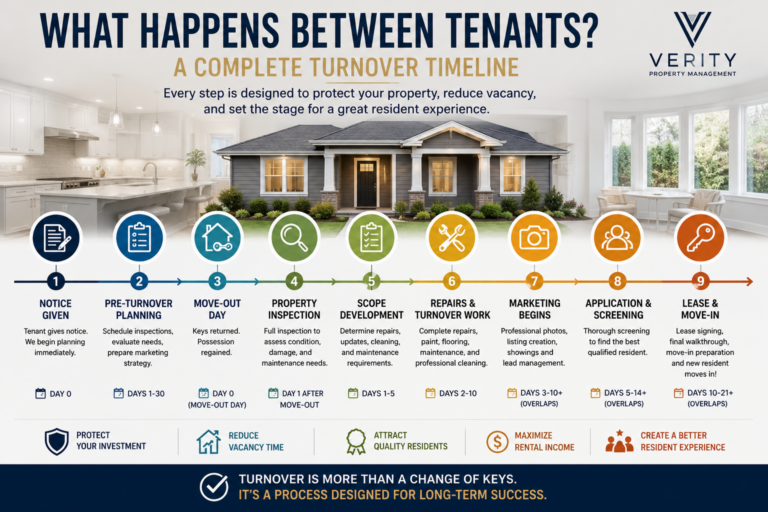
Day 0: Notice Is Given
Many owners think turnover starts when the tenant moves out. We think turnover starts the moment notice is received. As soon as notice is given, planning begins.
Activities may include:
- reviewing lease expiration dates
- discussing renewal opportunities
- evaluating market rent
- creating a turnover timeline
- planning marketing strategy
This is one reason lease renewals are such an important part of property management.
Related Article: Lease Renewal Strategy: Retain or Replace with Confidence
Days 1–30: Pre-Turnover Planning
Before the tenant moves out, we begin preparing for what comes next.
Activities often include:
- scheduling inspections
- reviewing maintenance history
- identifying potential repairs
- preparing marketing materials
- coordinating vendor availability
Many future delays are prevented during this stage.
Strong systems create smoother turnovers.
Move-Out Day
Keys are returned.
Possession is regained.
Now the property can be fully evaluated.
This is where the operational work truly begins.
Day 1 After Move-Out: Property Inspection
The first priority is understanding the property’s condition.
We evaluate:
- cleanliness
- damage
- maintenance needs
- safety concerns
- lease violations
- normal wear and tear
This inspection creates the roadmap for everything that follows.
Related Article: Why Property Inspections Matter More Than Most Owners Realize
Days 1–5: Scope Development
Once the inspection is complete, we determine:
- required repairs
- paint needs
- flooring replacement
- cleaning requirements
- landscaping improvements
- preventative maintenance opportunities
This step is often more complex than owners expect.
The goal isn’t simply making the property look good.
The goal is making the property rent-ready.
Days 2–10: Repairs and Turnover Work
Depending on the property’s condition, work may include:
- HVAC servicing
- plumbing repairs
- drywall repair
- paint touch-ups
- flooring replacement
- appliance maintenance
- professional cleaning
Many owners are surprised by how much preventative maintenance can be completed during turnover.
Related Articles:
Preventative Maintenance: The Easiest Way to Protect Your Investment
Common Maintenance Issues in North Texas Rental Properties
Marketing Begins
One of the biggest misconceptions about turnover is that marketing begins after repairs are complete.
Whenever possible, marketing begins earlier.
Activities include:
- professional photography
- listing preparation
- online advertising
- showing coordination
- lead management
The objective is minimizing vacancy while still delivering a quality resident experience.
Related Article: How We Reduce Vacancy (And Protect Your Rental Income)
Application and Screening
This may be the single most important step in the entire process. A quality resident can dramatically improve the ownership experience. A poor resident can create years of frustration.
Our screening process evaluates:
- credit
- income
- rental history
- background information
- application quality
Related Article: Tenant Screening: The First and Most Important Decision
Lease Signing and Move-In Preparation
Before move-in, several important steps occur:
- lease execution
- security deposit collection
- utility coordination
- move-in scheduling
- resident communication
- final property review
The goal is creating a smooth transition for both the owner and resident.
Move-In Day
The new resident receives possession.
Documentation is finalized.
Move-in photos are completed.
Communication expectations are established.
The turnover process is complete.
The resident experience begins.
Why Turnovers Matter
Many property owners focus on one metric: Days vacant.
While vacancy is important, it isn’t the only objective.
A rushed turnover can create:
- maintenance issues
- resident dissatisfaction
- future repair costs
- premature turnover
The goal is not simply speed. The goal is quality.
Because quality turnovers often lead to longer tenancies and better outcomes.
The Bottom Line
A turnover is much more than a change of keys.
It’s a structured process designed to:
- protect the property
- reduce future maintenance issues
- attract quality residents
- maximize rental income
- create a better ownership experience
At Verity, every step is designed to support long-term success—not just short-term occupancy.
Related Articles
- Lease Renewal Strategy: Retain or Replace with Confidence
- Why Property Inspections Matter More Than Most Owners Realize
- Preventative Maintenance: The Easiest Way to Protect Your Investment
- Tenant Screening: The First and Most Important Decision
- How We Reduce Vacancy (And Protect Your Rental Income)
Let’s build a better system for your property.