At Verity Property Management, we check water pressure as part of our routine inspection process.
It might seem like a small thing—but it matters.
Too low, and tenants deal with poor showers, weak flow, and an overall frustrating living experience.
Too high, and pressure can damage appliances, wear out plumbing, and even lead to burst pipes and costly flooding.
The best approach is simple: identify and fix pressure issues early.
Recently, we found a home with high pressure at the street, but weak pressure inside the house.
That’s usually a sign the pressure reducing valve (PRV) is failing.
In this case, the valve had been installed about 10 years ago. It wasn’t installed incorrectly—but it was buried nearly two feet underground with no access point.
Finding it and replacing it required digging it up entirely.
At that point, there were two options:
We could replace the valve, cover it back up, and move on.
Or we could fix the problem in a way that made the system better going forward.
We chose the second path.
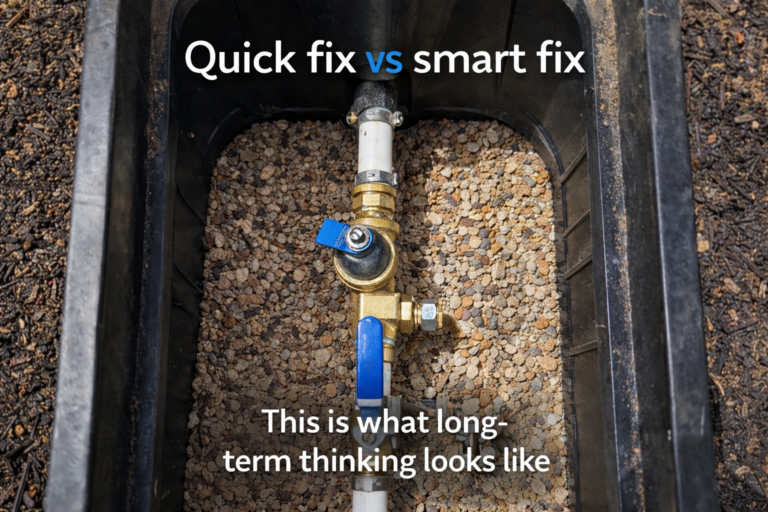
Our contractor installed a proper access box, added a dedicated shut-off valve for the home, replaced the PRV, and raised the fittings so everything is now easily accessible.
It cost a bit more upfront.
But now:
• The system is easier to service
• Emergency shut-off is faster and safer
• The hardware is better protected
• Future repairs will be simpler and less expensive
This is the difference between reactive maintenance and strategic maintenance.
Anyone can fix a problem.
The question is whether you fix it in a way that prevents the next one.
Related Articles
- Why the Cheapest Property Management Option Often Costs More
- Understanding Maintenance Costs: What Property Owners Are Actually Paying For
- Preventative Maintenance: The Easiest Way to Protect Your Investment
- Maintenance Isn’t About Fixing Problems—It’s About Making the Right Decision
- The HVAC Failure Scenario: How Good Property Managers Make Decisions
Let’s build a better system for your property.